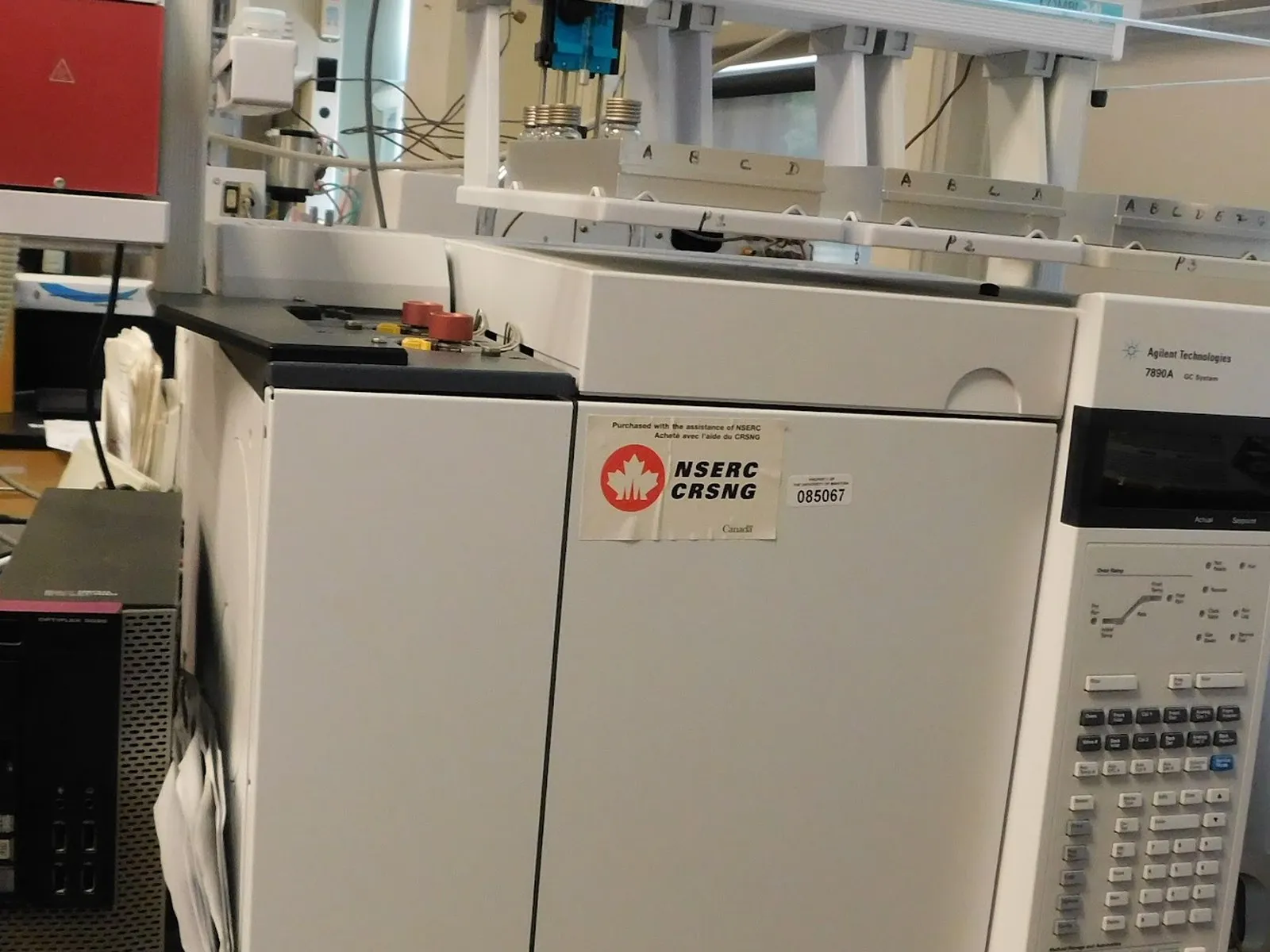
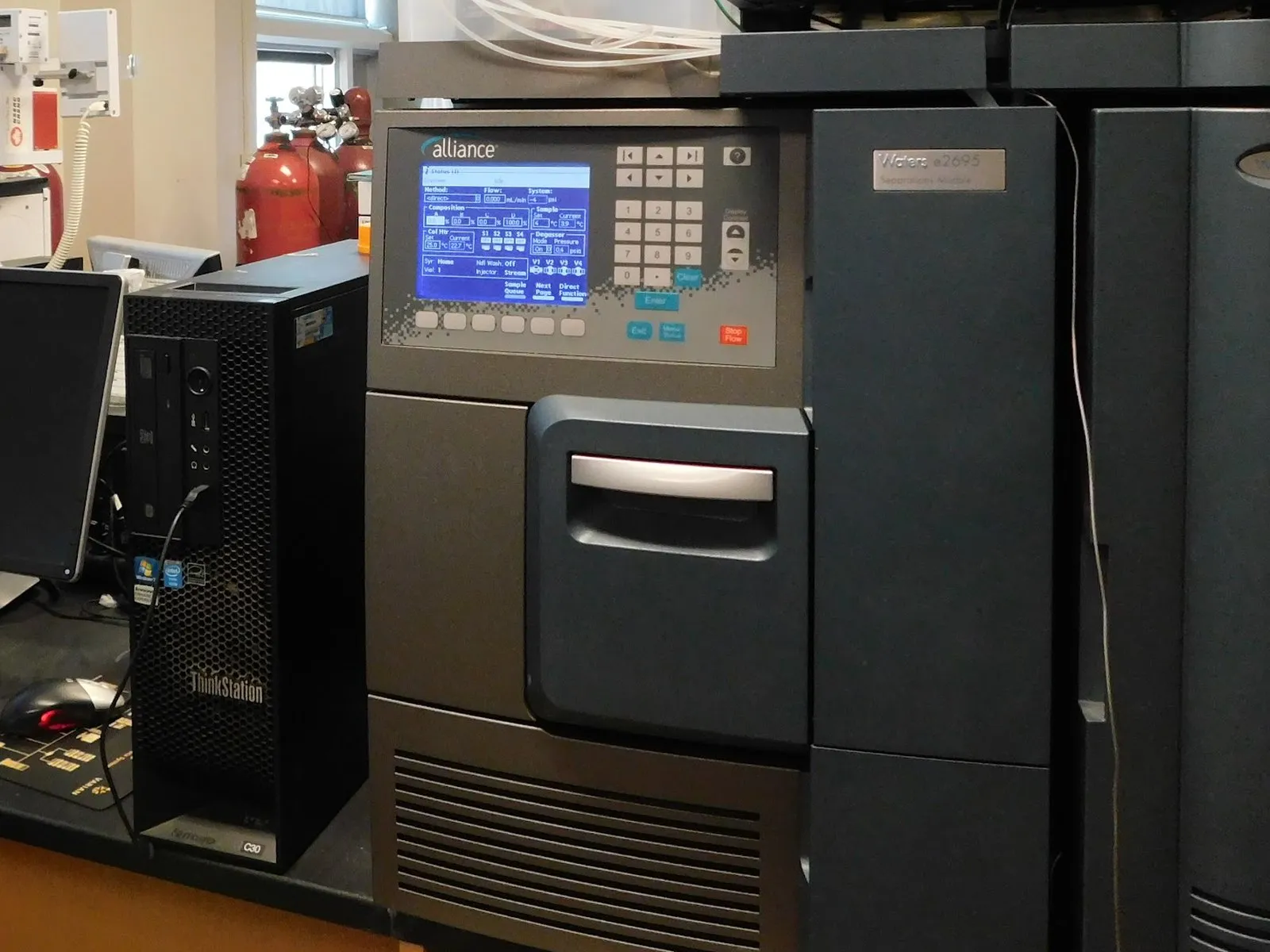
What is in the lab
Experimental and field capability built.
Instrumentation
-
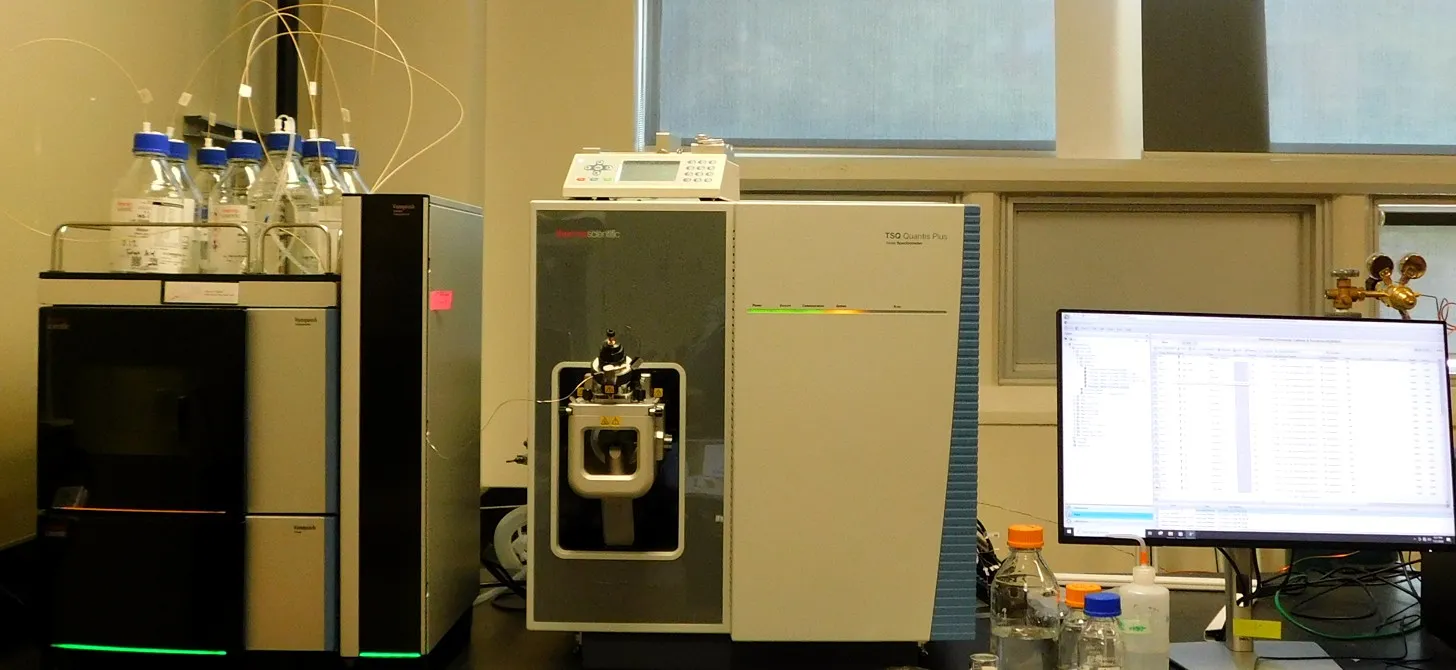
Thermo Scientific TSQ Quantis Plus with Vanquish Flex LC
Triple quadrupole LC-MS/MS
Acquired in 2025 through the Canada Foundation for Innovation John R. Evans Leaders Fund, for trace-level quantification of micropollutants and their transformation products.
-
UV sources, collimated beams, and radiometers
Low-pressure and medium-pressure mercury lamps, an excimer source at 222 nm, and Violumas LEDs at 260 and 310 nm, with bench-scale collimated beam apparatus and radiometers for controlled fluence experiments.
-
UV-vis spectrometers
Four StellarNet portable spectrometers covering 190 to 850 nm, used both in the lab and in the field, alongside a VWR V-1200 benchtop instrument.
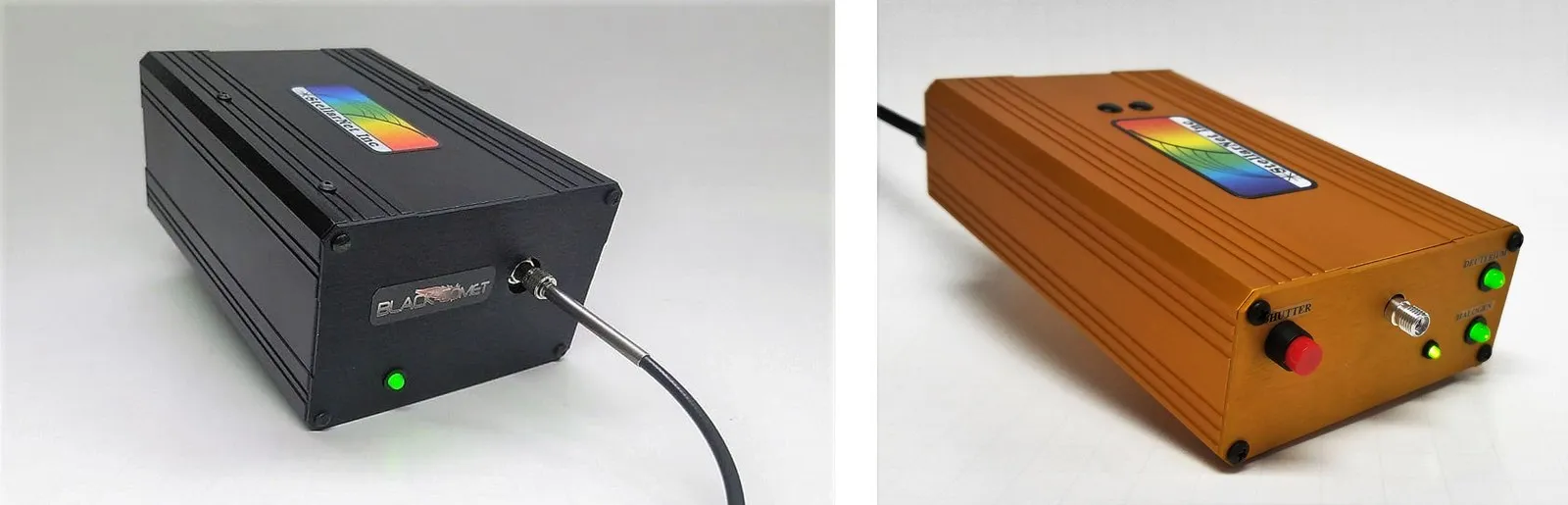
One of the StellarNet spectrometers, with its matched deuterium-halogen source. -
Field monitoring instrumentation
A YSI EXO1S multi-parameter sonde as a reference instrument, alongside a prototype scavenging capacity meter developed in the group, for deployment in Manitoba waters.
-
Other instruments
Stainless steel annular UV reactors at 20 cm and 50 cm diameter, and a micropollutant extraction system for sample preparation and concentration, including PFAS.
This is not an exhaustive list; ask if you are looking for something in particular.
Departmental facilities